



By @IntEngineering, Atharva Gosavi
Jun 02, 2026
Laser system tracks, kills mosquitoes using custom vision model
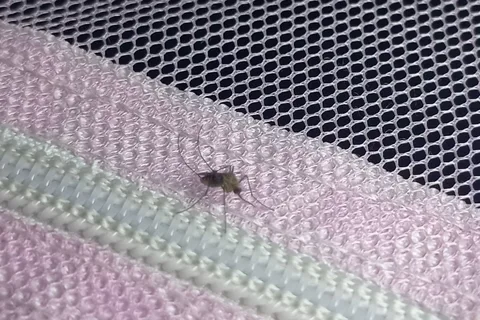
A computer vision and robotics enthusiast has developed an AI-powered laser system capable of detecting, tracking, and eliminating mosquitoes using custom-trained deep learning models and precision targeting hardware. Steven Cheng recently unveiled the project online, describing it as the “ultimate mosquito killer.” The prototype combines computer vision, artificial intelligence, industrial robotics, and laser technology to automatically identify mosquitoes and direct a laser toward them while incorporating safety mechanisms designed to prevent accidental firing near humans or flammable materials. The project took approximately four months to complete and required the creation of a custom mosquito image dataset for model training. AI model trained to recognize mosquitoes The system’s detection capabilities are based on a deep learning model trained using thousands of mosquito images collected by Cheng. To build the dataset, Cheng used a DSLR camera paired with a high-magnification zoom lens to photograph mosquitoes and generate training data for the computer vision model. “A side effect of ‘welcoming’ mosquitoes in for photographs at this stage of the project was “countless mosquito bites all over my body,” Cheng said. After collecting and annotating the images, he trained a deep learning model to recognize mosquitoes in real time. The training process required significant computing resources. The task “really put my graphics card through its paces,” he said. However, Cheng noted that the detection performance of the final model was “quite good.” The trained model enables the system to distinguish mosquitoes from other objects before initiating the targeting sequence. Laser mounted on an industrial-grade tracking platform Once mosquito detection was achieved, Cheng integrated a laser-based elimination mechanism into the system. According to the project details, the laser was calibrated to “instantly turn mosquitoes into roasted ones.” The laser assembly was mounted on a high-precision industrial rotary stage and a gimbal capable of rapidly adjusting its position to follow moving targets. The targeting system receives location data from the AI model and continuously updates the laser’s position to maintain alignment with detected mosquitoes. The combination of computer vision and robotic tracking allows the system to identify and engage mosquitoes automatically without human intervention. The project demonstrates how advances in artificial intelligence and machine vision can be combined with precision motion-control systems to automate highly specific tasks. Safety features prevent accidental firing To address safety concerns associated with operating a laser indoors, Cheng added a secondary wide-angle camera to monitor the surrounding environment. The additional camera is used to detect humans and flammable materials that may be present within the laser’s potential firing path. According to Cheng, the system continuously evaluates whether there is any overlap between the target mosquito and detected objects. If a person or flammable material is identified within the engagement area, the system prevents the laser from firing. The safety features were introduced following simulation testing conducted during development. Cheng reported that the prototype performed as intended during testing and stated that all the mosquitoes in his residence were “successfully eliminated” after a night’s effort. While the project remains a personal prototype, it highlights the growing accessibility of AI, computer vision, and robotics technologies, enabling individuals to develop increasingly sophisticated automated systems outside traditional research and industrial environments.
Source: Interesting Engineering