



By Berenice Baker
Jun 17, 2026
QuEra, AWS target fault-tolerant quantum computing on Amazon Braket by 2028
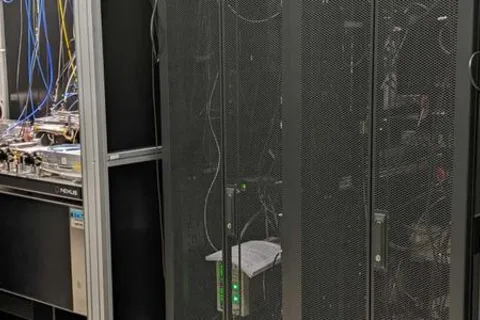
Planned Libra system aims to feature more than 256 error-corrected logical qubits and target Megaquop-scale performance June 17, 2026 By Have your say – QuEra QuEra Computing and Amazon Web Services (AWS) say they plan to make a fault-tolerant quantum computer available through Amazon Braket in 2028, setting one of the quantum industry's most concrete timelines to date. QuEra said its planned Libra system is being designed as a Megaquop-scale fault-tolerant quantum computer capable of performing approximately 1 million logical quantum operations. The company projects the system will feature more than 256 error-corrected logical qubits and a logical error rate of 10−6, specifications it says are needed to support computations at that scale. Speaking to SDxCentral at Commercialising Quantum Global 2026 in London, Tommaso Macrì, senior director of business development at QuEra, described the announcement as a roadmap built on a series of technical milestones already demonstrated by the company and its academic partners. "The field has evolved from analog to digital, in particular from physical qubits to logical qubits," Macrì said. Logical qubits use quantum error correction techniques to detect and correct errors that would otherwise accumulate during computation. The announcement extends a relationship that began in 2022 when QuEra's Aquila system became the first neutral-atom quantum computer available through Amazon Braket. According to Macrì, researchers have published more than 50 peer-reviewed papers using the platform since its launch. QuEra's Aquila system – QuEra AWS said Libra will allow customers to develop quantum applications alongside existing cloud infrastructure, including high-performance computing and AI services, creating hybrid quantum-classical workflows. QuEra argues the 2028 timeline is realistic because many of the underlying technologies have already been demonstrated separately in peer-reviewed research. "Over the past few years, we kind of de-risked a number of technical milestones and technical challenges in order to get there," Macrì said. The remaining challenge is integrating those capabilities into a production system that can operate reliably for extended periods. QuEra's neutral-atom approach uses arrays of individual atoms manipulated with optical tweezers. The company and its research partners at Harvard University and MIT have published work demonstrating logical qubits, quantum error correction, logical operations and large-scale atom-array systems, forming the basis of the Libra architecture. Macrì said organizations interested in quantum computing should begin developing expertise before fault-tolerant systems become available. "There is typically a long period of time for users to get up to speed with the nuances of the technology," he said. QuEra is working with customers through a co-design model that identifies potential use cases and develops hybrid workflows before large-scale fault-tolerant hardware arrives. The announcement comes as quantum hardware vendors increasingly shift attention from qubit counts toward logical qubits and fault tolerance, which many researchers view as prerequisites for commercially useful quantum computing.
Source: SDxCentral