



By Brooklyn Smith
Jun 18, 2026
Researchers discover 500 hidden earthquakes beneath Antarctica: 'Improve our understanding of possible futures'
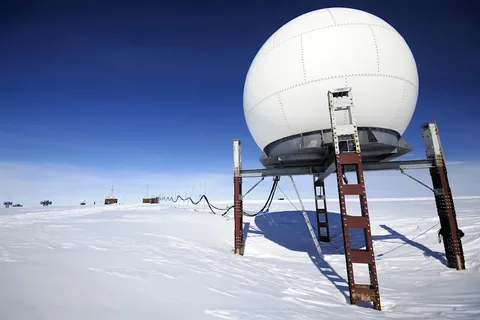
More than 500 earthquakes deep beneath Antarctica went unnoticed until scientists used artificial intelligence to reexamine the data, and some were located where researchers did not expect to see them. The finding suggests the frozen continent is far more seismically active than many people once assumed, and that better tools could help scientists understand changes that may ultimately affect communities far beyond Antarctica. What happened? A new study found that machine learning could identify hundreds of tiny earthquakes buried in older seismic records, according to Live Science. Researchers revisited records from 49 seismic stations spanning 2001 to 2004 and 2012 to 2015. Among those records were more than 500 previously overlooked earthquakes, measuring from magnitude 1.6 to 3.5, located 60 to 90 miles beneath David Glacier, a massive outlet glacier that sends roughly 4% of the East Antarctic Ice Sheet into the ocean. Earthquakes at these depths are usually linked to plate boundaries, especially subduction zones, but this activity showed up well within a tectonic plate instead of near an active edge. According to lead author Long Ho, the quakes cluster at a subsurface boundary between very different rock environments. "The earthquakes occur where the cold, rigid crust and upper mantle beneath East Antarctica meets warmer, softer rock beneath West Antarctica, and this contrast creates an abrupt change in tectonic strength," Ho told Live Science. He added, "As machine-learning tools continue to improve, they could reveal that deep, continental-interior earthquakes are more common than currently recognized." Why does it matter? The research could improve scientists' understanding of Antarctica at a time when the continent's ice plays a major role in global sea-level rise. The newly detected quakes are too weak to threaten the ice sheets above or the Antarctic ecosystem, but learning more about the forces beneath the ice can help researchers build a clearer picture of how Antarctica works. Accurate forecasts of future ice loss and sea-level rise are especially important for coastal communities. Smarter analysis tools can also extract more value from older datasets, meaning scientists may be able to make important discoveries without waiting decades for new records to accumulate. The study also points to a broader shift in Earth science, as AI may reveal that deep earthquakes inside continents are more common than researchers once realized. If that proves true, it could reshape how scientists think about tectonic activity in places long considered relatively quiet. Glaciologist Richard Alley, who was not involved in the research, said, "Antarctica was [long] considered to largely lack earthquakes. Now, we know that the apparent lack of earthquakes was really a lack of [tools] to listen to earthquakes." He added, "I worry a lot about the ice sheet," adding that he hopes this work helps scientists "improve our understanding of possible futures."
Source: Yahoo