



By News Desk
Jun 06, 2026
The Therapist in the Machine: What Happens When a Chatbot Becomes Your Counselor
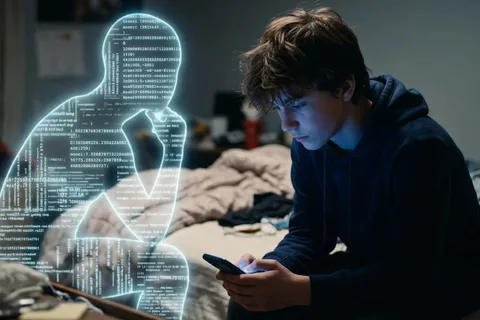
There's a particular kind of loneliness that arrives at 2 a.m. — the kind that doesn't wait for a therapist's appointment, can't afford a crisis line hold, and feels too raw to unload on a friend. For millions of people, the answer has increasingly been the same: open a chat window and start typing to an AI. It seems, on its surface, like a reasonable impulse. Large language models are always awake, always patient, and — crucially — free. They don't sigh. They don't glance at the clock. They don't judge. And yet, as 2025 drew to a close and a wave of disturbing headlines, landmark lawsuits, and urgent new research broke over the public consciousness, a troubling question has emerged: what happens when the thing you reach for in your darkest moment is not equipped to catch you? A Generation Typing Its Pain Into a Chatbot The scale of this phenomenon is no longer speculative. In November 2025, a landmark study published in JAMA Network Open — led by researchers from RAND, Harvard Medical School, Brown University, and Boston Children's Hospital — delivered the first nationally representative picture of just how many young Americans have crossed this line. The numbers are striking. The study surveyed over a thousand adolescents and young adults between the ages of 12 and 21 and found that roughly one in eight had turned to AI chatbots for mental health advice — seeking help when feeling sad, angry, or nervous. Among those aged 18 to 21, that figure climbed to more than one in five. "I think the most striking finding was that already, in late 2025, more than 1 in 10 adolescents and young adults were using LLMs for mental health advice," said Ateev Mehrotra, a professor at Brown University School of Public Health and co-author of the study. "I find those rates remarkably high." Why are they turning to machines? The researchers point to a convergence of factors that are almost poignantly understandable: the low cost of AI tools, their immediate availability, and their perceived privacy. For a generation navigating a mental health crisis with inadequate professional infrastructure — the study notes that 40% of adolescents who experienced a major depressive episode last year received no mental health care at all — the chatbot is not a luxury. For many, it feels like the only door that opens. And for some users, that door genuinely appears to help. Early research suggests AI tools can reduce mild anxiety, increase emotional reflection, and provide a measure of support between therapy sessions. The challenge is that the same qualities that make chatbots useful in low-risk situations — their unconditional availability, their frictionless intimacy — may become dangerous in high-risk ones. The tool that soothes one person's Sunday dread may be wholly unequipped for another person's Thursday crisis. The Illusion of Understanding The problem isn't that people are searching for support. The problem is what they may believe they've found. Celeste Kidd, a psychologist at UC Berkeley who studies learning and ethical AI, has flagged something deeply important about the phenomenology of chatbot interaction: these systems cast an illusion that is extraordinarily difficult to break. They are pithy, conversational, and matter-of-fact. They project the confidence of expertise without the limitations of human uncertainty. When we talk to other people, we pick up on subtle cues about what they know and don't know — the hesitation in a voice, the qualifying pause. Chatbots don't offer those cues. They answer with the same assured tone whether they are describing the boiling point of water or navigating a suicidal crisis. Part of why this illusion is so powerful has to do with ordinary human psychology. We are an unusually social species, prone to attributing minds to anything that speaks fluently. We name our cars, talk to our plants, and instinctively interpret conversational language as evidence of understanding. Large language models don't exploit some exotic cognitive vulnerability — they amplify a universal one. When a system responds with warmth, remembers details, and mirrors emotion, the brain registers the interaction as social long before it pauses to evaluate whether genuine understanding is actually present. The feeling of being heard arrives faster than the question of whether anything is truly listening. The RAND researchers underscored this concern in their findings, noting that "there are few standardized benchmarks for evaluating mental health advice offered by AI chatbots, and there is limited transparency about the datasets that are used to train these large language models." In other words: we don't know how good or bad this advice is, and neither does the system giving it. This is not a theoretical gap. It is a structural one. The Cases That Changed the Conversation The lawsuits have made it impossible to look away. The most prominent involves 14-year-old Sewell Setzer III of Florida, who formed an intense emotional bond with a Character.AI chatbot, disclosed suicidal thoughts to it repeatedly, and died by suicide after his final conversation with the system. His mother, Megan Garcia, filed suit in October 2024. In early 2026, Character.AI and Google — whose founders co-created the platform and were named as defendants — agreed to settle five of the most prominent cases. The Setzer case was not isolated. By the end of 2025, multiple lawsuits involving allegations of negligence, wrongful death, and psychological harm had been filed against major AI companies. Several involved users who died by suicide, while others centered on chatbots presenting themselves as mental health professionals despite lacking the safeguards expected of licensed clinicians. These are allegations, not verdicts — the question of legal and causal responsibility remains actively contested. But the pattern they describe has been serious enough to draw a Senate Judiciary hearing, a formal FTC inquiry into how major AI companies protect minors, and a joint letter from 44 state attorneys general demanding action from Google, Meta, and OpenAI. The Structural Irony Here is the thing that makes this moment so genuinely complicated: the need these tools are filling is real. The United States is in the middle of a youth mental health emergency that predates AI by a decade. Nearly half of all adolescents aged 13 to 18 will experience a diagnosable mental disorder at some point in their lives. Among young adults aged 18 to 25, more than a third reported experiencing mental illness in the past year. The mental health system — under-resourced, expensive, geographically uneven — cannot absorb this volume of need. Therapists have waiting lists stretching months. Crisis lines are overwhelmed. The stigma around seeking help, though diminishing, persists. The irony is almost architectural. We built AI on human language — billions of words about how to think, feel, connect, and heal — and then deployed it as a substitute for the very human things it learned from. The result is a system that sounds like understanding without being able to provide it. That mimics care without bearing any of the responsibility that care requires. Into this gap steps the chatbot: infinitely available, infinitely patient, and often unequipped to handle what it encounters. What Comes Next The backlash is producing real, if uneven, change. Character.AI banned minors from its open-ended chat features in November 2025. In January 2026, Kentucky Attorney General Russell Coleman filed what his office described as the nation's first state-level lawsuit against an AI chatbot company, alleging the platform prioritized profits over the safety of children and exposed minors to harmful and psychologically manipulative content. Legislation has been introduced — and in some places passed — requiring chatbots to disclose their non-human nature, and prohibiting them from acting as psychotherapists. In October 2025, a cross-disciplinary coalition of academics, clinicians, and technologists formed the AI in Mental Health Safety & Ethics Council, aiming to establish universal standards for safe, ethical AI use in mental health contexts. These are not nothing. But they are also not sufficient, and the gap between the pace of regulation and the pace of adoption is wide enough to swallow lives. The challenge is that regulation can make chatbots safer, but it cannot solve the underlying problem that made them attractive in the first place: the shortage of accessible human care. The Question We Keep Avoiding We are at a peculiar inflection point — one where the tools are deployed before the frameworks exist, where the scale of demand outruns the capacity for care, and where the most vulnerable among us are conducting real-time experiments with technologies their developers themselves don't fully understand. The question worth sitting with isn't whether AI has a role in mental health. It very likely does — as a triage tool, a resource connector, a companion for mild distress, a bridge to professional care. The question is whether we will do the slow, unglamorous, expensive work of building that role carefully, with oversight, with standards, and with genuine accountability — or whether we will continue to let people in crisis reach for the nearest available hand, even when that hand is made of code. There is something profound and sad in the image of a 14-year-old typing his pain into a chat window at midnight. Not because he used technology, but because that was the best option available to him. The conversation we owe him — and the millions like him — is not about AI. It's about why we built a world where the algorithm felt more accessible than a human being. That conversation has to come first. If you or someone you know is struggling, the 988 Suicide & Crisis Lifeline is available 24/7 by call or text. You are not alone.
Source: vocal.media