



By @mil_in_ua
May 31, 2026
Ukraine Testing Shows Limited Suitability of Phantom MK-1 Humanoid Robots for Battlefield Use
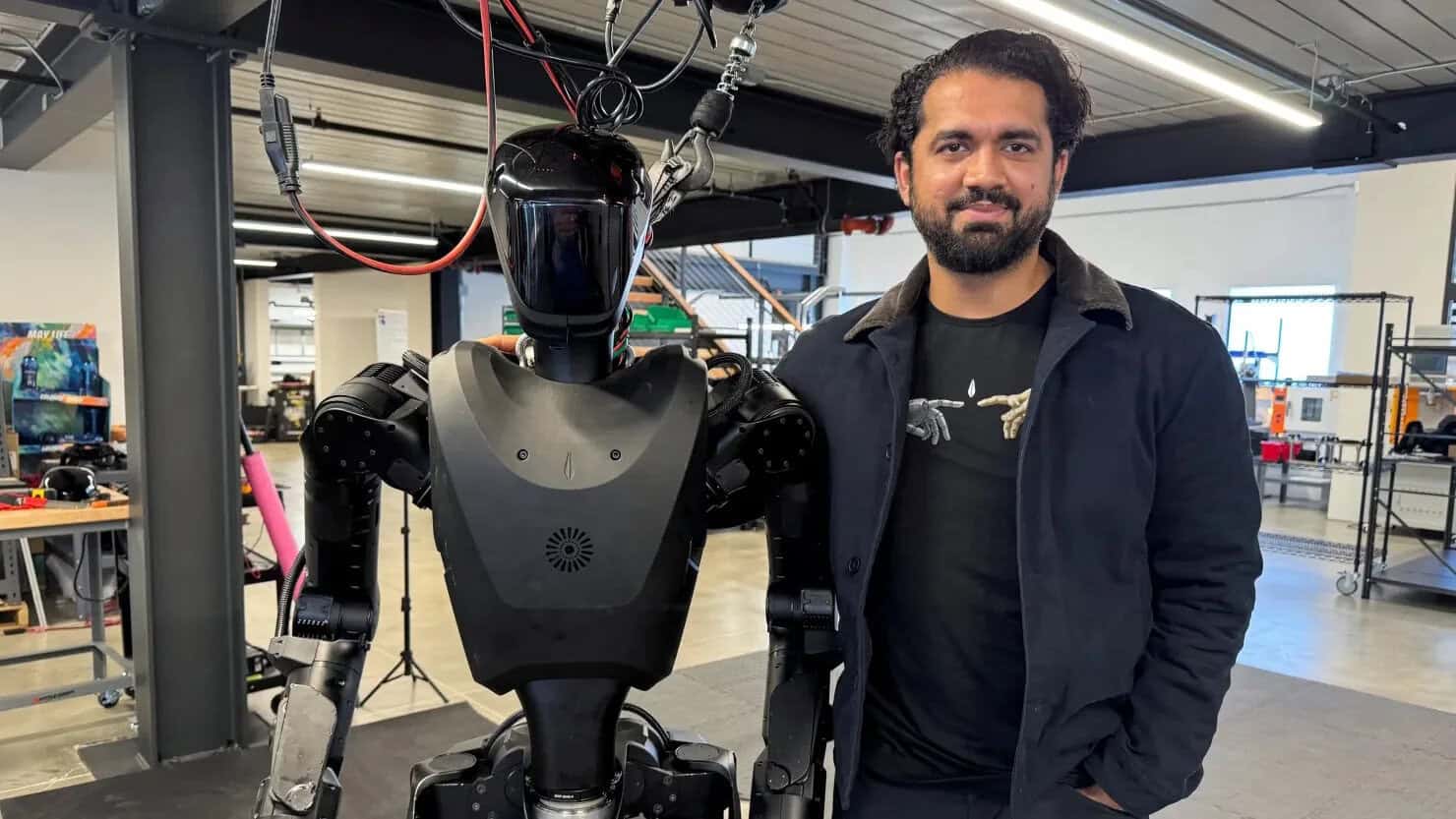
The trial operation of two Phantom MK-1 humanoid robot soldiers from Foundation Future Industries in Ukraine has shown potential for use, but there are current limitations to real deployment. This follows from a CNBC report. The two robots, transferred to Ukraine for testing in February 2026, were primarily used for logistical tasks in dangerous areas. According to Foundation CEO Sankaet Pathak, the tests, supported by the US government and conducted together with Ukrainian officials, demonstrated the robots’ potential for such tasks. However, while the MK-1 demonstrates the usefulness of the core technology, it remains far from the concept of “super soldiers.” The Phantom MK-1 can carry only about 20 kilograms of payload, is not waterproof, and lacks sufficient battery life for large-scale deployment. The Foundation is planning to send upgraded Phantom 2 robots to Ukraine in 2026, which, according to Pathak, will have “superhuman” capabilities and twice the payload capacity of Phantom 1. The company expects the trials in Ukraine to support further cooperation with the US military. The startup has already received government research contracts totaling $24 million to test the use of robots in inspection, logistics, and weapons-related tasks across the US Army, Navy, and Air Force. The CEO noted that discussions with government officials have shifted from research to scaling the deployment of robotics. He said the Foundation aims to field its technology in the US military and, if necessary, in frontline conflict zones within 12-18 months. To do this, the company aims to scale production of humanoid robots to thousands of units per year starting in 2026. Humanoid robots are heavy and expensive; the Phantom costs about $150,000. They also require regular recharging, can malfunction, and often lose balance. The Phantom MK-1 is powered by about 20 motors, each of which must function reliably. Deploying humanoid systems alongside regular troops also creates additional risks. Captured systems can become a source of sensitive data, as they store and transmit significant information. There is also the risk of signal jamming or spoofing. Another risk is the humanoid system’s ability to accurately assess situations. Artificial intelligence remains imperfect and can produce “hallucinations.” AI models may also suffer from algorithmic bias or behavioral drift, with decision-making potentially deviating over time as systems adapt in real-world conditions.
Source: Мілітарний