



By @voguemagazine, Bella Webb
Jun 11, 2026
Your New Bottega Veneta Bag Could Be Made From Mushrooms
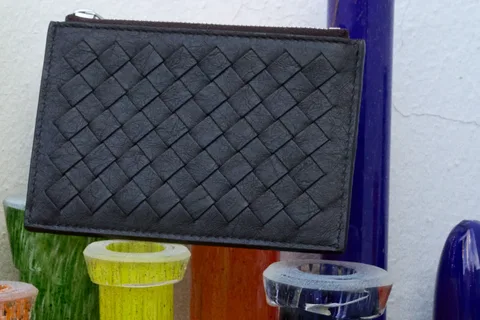
Bottega Veneta is betting on mycelium. Earlier this month, the Kering-owned brand released a limited collection of small leather goods swapping the bovine leather in its signature intrecciato weave for Ephea, a mycelium-based alternative by Italian biomaterials startup Sqim. The pieces are part of the fall 2026 men’s collection by creative director Louise Trotter. For Kering, the six-piece collection is a vote of confidence for alternative materials. The luxury group took part in Sqim’s Series A funding round in 2024 and Balenciaga sent a coat made from Ephea down its FW22 runway, but this is the first time Bottega Veneta has used it. The collaboration comes after Ephea was incubated by Kering’s Material Innovation Lab in Milan, which identifies, evolves, and helps to operationalize hundreds of alternative materials, with the hope of embedding them into brand collections. Balenciaga showed a coat made from Ephea for Fall/Winter 2022. Actually making this happen is a delicate process. It takes executive buy-in, winning over design teams, and sometimes years of research and development. On the first point, Kering released its 10-year impact report for the 2016-2025 period last week, after CEO Luca de Meo set a slew of targets as part of his turnaround plan for the beleaguered luxury group. Among them are several sustainability goals incentivizing Kering brands to adopt alternative materials like mycelium and to reduce the intensity of bovine leather products. By 2035, de Meo wants 40% of Kering’s ready-to-wear offering to be made from alternative materials, and by 2028, he wants to see a 30% reduction in leather intensity compared to 2025. He is also pursuing a strong innovation agenda, aiming for 20% of revenue to be generated from innovation by 2035 — split evenly between material and process innovation, and new services and business models. Bottega Veneta’s mycelium collection is a step in the right direction, says Kering chief sustainability and institutional affairs officer Marie-Claire Daveu. “The introduction of woven mycelium in Bottega Veneta’s collection is a compelling example of how material innovation can open new creative possibilities, while upholding the exceptional standards of quality, desirability, and savoir-faire that define luxury,” she explains. “Developing and adopting next-generation materials is an important part of Kering’s sustainability strategy, while eco-design is becoming an increasingly important consideration from the earliest stages of product development. We see innovation as a catalyst for reimagining luxury for the future. The next chapter of luxury will be defined not only by what products look like, but by how they are designed, sourced, and made.” A win after false starts In the early 2020s, mycelium-based alternatives to leather experienced something of a boom, attracting hundreds of millions in venture capital, boosted by glossy brand pilots and promises of commercial scale. Stella McCartney riffed on its signature Frayme bag with California material innovation startup Bolt Threads. Ganni followed, and even helped Bolt Threads launch the Greener Pastures Pledge, giving brands preferential access to its hero material — Mylo — if they vowed to phase out virgin leather. Then, in July 2021, former Hermès CEO Patrick Thomas joined the board of fellow Californian competitor Mycoworks, which released its first collaborative bag with Hermès later that year, and secured a $125 million cash injection shortly after. At the same time, Natural Fiber Welding inked partnerships with Stella McCartney, Ralph Lauren, MCM, and Alexander McQueen’s diffusion line MCQ to use its Mirum material. Then, it all came crashing down. Bolt Threads ceased production of its Mylo leather alternative in 2023, after failing to secure enough funding to reach commercial scale. In 2025, Mycoworks shuttered its South Carolina biomanufacturing plant, announcing a pivot to processing cheaper third-party mycelium instead of cultivating it themselves, and Natural Fiber Welding narrowly escaped bankruptcy, adding to the sense of an ending. The Woven Mycelium collection features six styles in three colors. The key to luxury embracing these materials is to treat them with the same care and craft as conventional leather, says creative director Trotter. For this collection, Bottega Veneta used Ephea to recreate its signature intrecciato weave. “True to Bottega Veneta values, we explored the balance between material innovation and artisanal tradition, refining and perfecting through the technique and craftsmanship that are deeply rooted in Bottega Veneta’s heritage,” she explains. Bottega Veneta says its Woven Mycelium offering will “continue to evolve through future collections with the introduction of new styles and colorways”. While there’s no indication that Bottega Veneta will replace huge swathes of its leather products with mycelium, the Ephea range offers an alternative for customers seeking products free from animal-derived materials. The hope is to also help scale innovative materials, so other brands can access them at lower price points and in higher quantities, adds Bottega Veneta’s head of sustainability Yoann Regent. “Beyond impact reduction, the Woven Mycelium range allows us to explore new textures and aesthetics, while maintaining the highest standards of quality, ensuring that sustainability reinforces, rather than compromises, the longevity and desirability of our products,” he says. “By bringing mycelium into a commercial context, we also contribute to accelerating its adoption, supporting supplier ecosystems, and helping drive systemic change at industry level.”
Source: VOGUE