



By Hans van Leeuwen
Jun 05, 2026
China tightens leash on Beijing tech bros to combat the West
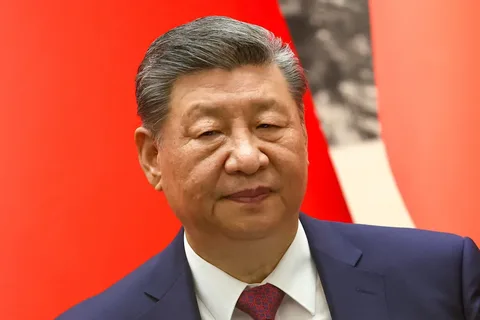
China’s Communist Party regime has tightened its squeeze on the country’s powerful tech titans – and already, it is having knock-on effects. Under new sweeping rules, issued last week, Beijing is now able to stop Chinese technology firms from moving their offices, tech, data or staff to other countries. The reasons behind the clampdown are simple. Xi Jinping, the Chinese president, is determined to ensure China keeps pace with the US in AI, quantum computing and robotics. That means not letting Chinese tech firms become too deeply enmeshed in the US, Europe or Japan. There are other upsides for Xi, too. Beijing has been growing increasingly anxious about the rising class of influential billionaire executives that could challenge the Party’s power and authority. Xi, it seems, plans to keep them on a tight leash. “State intervention – and the injection of politics and security into the economy – is trending up in China,” says Charles Austin Jordan, of the consultancy Rhodium Group. For those within the country, it is having a chilling effect. “If you’re a private Chinese tech entrepreneur with global dreams, there isn’t much cause for optimism at the moment,” Jordan says. The new rules are not only denting confidence within China, but have also sent shock waves across the West as geopolitical fault lines deepen. Beijing has already scuppered a $2bn (£1.5bn) merger between Meta, the owner of Facebook and Instagram, and the Chinese-owned AI platform Manus. The new rules introduced last week enhanced the regime’s coercive powers. Chinese tech firms will now need official approval before they can comply with any order from a non-Chinese court or regulator. What’s more, they give Xi a formal ability to yank Chinese firms’ investments out of another country. It gives him a new retaliatory weapon against any country that threatens trade or investment restrictions on China. This means Beijing will have “real leverage”, says Joe Peissel, of the China advisory firm Trivium. “In an extreme scenario, it could require Chinese capital to exit specific countries or sectors. “If that dynamic takes hold, you’re looking at accelerated financial decoupling with consequences for capital flows, asset valuations and market access on both sides.” It suddenly feels like a lot longer than 16 months since Xi invited Jack Ma, the billionaire founder of China’s Amazon-equivalent Alibaba, to come out of a five-year political deep-freeze. Ma took a front-row seat at a summit in Beijing where Xi shook hands with a bevy of top tech executives. It was a choreographed event, designed to signal a détente. Beijing had previously decided that Ma was getting too big for his boots after he accused China’s state-owned banks of having a “pawn-shop mentality” in 2020. The float of his fintech group Ant was cancelled and he disappeared from public view. By early 2025, though, he was back in the fold. Xi told Ma and the other execs that it was “the right time for private enterprises and private entrepreneurs to fully display their talents”. Xi needed Ma and his ilk back on Team Beijing. The Chinese economy’s growth was cooling. Donald Trump had just returned to the White House, flanked by tech honchos such as SpaceX’s Elon Musk, Amazon’s Jeff Bezos and Meta’s Mark Zuckerberg. It looked like Trump was going to step up the US-China contest for tech supremacy. Xi worried that China might lose access to the US market and to American-made semiconductors. China would need to be technologically self-sufficient. Better still, from Xi’s perspective, would be if Beijing could do in tech what it had done in rare earths: build a superior position, which it could use to turn the screws back on the US. For that, it would need a powerful Chinese tech sector. But Xi would have to do more than just cosy up to the tech bros and turn on the subsidy pump. The sector would need the freedom to chase innovation and profit – and this would entail letting the firms go overseas. “Western tech companies became successful by going global. Chinese tech entrepreneurs want to do the same,” says Jordan. Xiao Hong, a software whizz-kid, founded his tech start-up Butterfly Effect in 2022. It released its first AI platform, Monica, a year later and its AI agent Manus in March 2025. The company began looking to expand beyond its Wuhan base into the US, Japan and South Korea. It took venture capital funding but reportedly rejected Chinese government support. The company moved to Singapore in the middle of 2025, shuttering most of its Chinese operation. This helped soothe Washington’s worry about Butterfly Effect’s Chinese origins. Meta made its $2bn offer for Manus in December. Beijing began investigating the deal a month later and in April, the authorities vetoed the transaction. This had “a chilling effect” on China’s tech sector, Jordan says. Entrepreneurs realised that “the doors to getting rich like the Manus investors did are shutting quickly”, he adds. In Jordan’s view, Beijing’s tight new leash will backfire. The attempt to keep Chinese tech in China is likely to hobble Xi’s other goal of winning the AI race. “Chinese talent will either move to where it can succeed or the companies will simply become less competitive over time,” he says. The new regime doesn’t just require companies to seek permission before expanding offshore. They must also offer continuous proof that they’re toeing the line. “Chinese firms investing abroad now face significantly heavier compliance burdens under full lifecycle supervision,” says Peissel. Not everyone is as gloomy about Xi’s sweeping new changes. Some Chinese commentators have tried to look on the bright side. They say that although Beijing’s clampdown on Manus blindsided Chinese tech firms, at least the rules of the game are now clear for all to see. Yet, it is what is in those rules that will really be worrying business and not just in China. When it comes to the tech supremacy race with Trump, Xi may be in danger of shooting himself in the foot. But by weaponising foreign investment, he could create plenty of collateral damage in the West.
Source: Yahoo