



By Damien Scott
Jun 16, 2026
Here’s What Experts Think About the SpaceX IPO
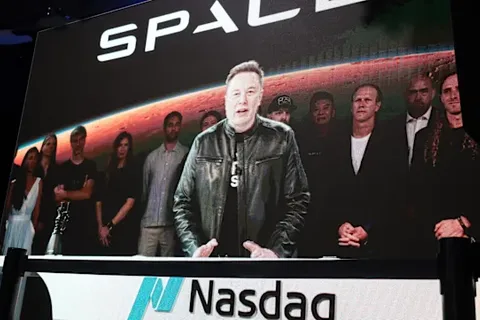
SpaceX just pulled off the largest IPO in market history. Now Wall Street has to figure out if any of it makes sense. On June 12, 2026, Elon Musk 's Space Exploration Technologies Corporation ( SpaceX) made history. It went public and immediately became the sixth-largest company in the United States. Under the ticker SPCX, SpaceX priced its shares at $135, raised $75 billion, and opened at $150 before climbing to a $176.52 intraday high and closing at $160.95, a 19% gain on its first day of trading. By the closing bell, SpaceX carried a market cap north of $2 trillion, vaulting past Tesla and sitting within striking distance of Amazon. Saudi Aramco's 2019 record? Gone. The largest IPO in the history of financial markets now belongs to a rocket company founded in 2002 by a man who, by his own admission at the Nasdaq podium, once gave his venture less than a ten percent chance of surviving. That's the story Wall Street wanted to tell on Friday. The broader story is considerably more complicated. The numbers that made this IPO historic are the same numbers that gave some analysts serious pause. SpaceX posted $18.7 billion in revenue in 2025 — impressive, by any reasonable standard — and then turned around and reported a $4.9 billion net loss in the same breath. The company's only profitable segment is Starlink, its satellite internet division, which generated $11.4 billion of that revenue and posted a $1.19 billion profit in its most recent quarter alone. Everything else — rockets, xAI, the orbital data center ambitions Musk outlined in the S-1 — currently bleeds money. At the IPO price, the stock traded at roughly 94 times trailing revenue. As it climbed through the session, that number climbed with it. For believers, none of that matters. You aren't buying what SpaceX is today. You're buying what SpaceX can become. For skeptics, that framing is exactly the problem. At a $2 trillion valuation, the future has already been priced in. What followed the opening bell was one of the most divided analyst debates in recent IPO memory. Price targets from institutional researchers span from $63 to $500 — a range so wide it tells you less about SpaceX's prospects than it does about how little consensus exists on what this company is actually worth. Here is what each of them had to say. THE BULLS These voices argue the stock rewards patient believers in Musk's vision—even at today's price. Chamath Palihapitiya CEO, Social Capital; SpaceX investor "That valuation is based on the thesis that SpaceX has opened the lowest-cost route into space, and that the largest opportunities are still ahead. SpaceX is changing the economics of reaching space the way Vasco da Gama changed the economics of reaching Asia." In a deep dive published on the eve of the IPO, Palihapitiya compared SpaceX to the Dutch East India Company, which at its 1720 peak held a market capitalization equal to roughly a third of the Dutch Republic's entire annual economic output. He argued SpaceX has unlocked three "prizes" behind cheap orbit—connectivity (Starlink), compute (orbital AI data centers), and critical minerals (lunar and asteroid mining)—and that its 20x reduction in launch costs is as transformative as da Gama's discovery of the sea route to Asia. Jim Cramer Host, CNBC's "Mad Money" "If you're willing to look at this as a different kind of stock, not a short or even medium-term investment ... then you've got my blessing. This is a long-term call on space exploration. If it comes down, then you should buy more because the upside is conceivably unfathomable. Never has one initial public offering captivated the minds of Wall Street and perhaps Main Street as much as Elon Musk's SpaceX." The well-known host argues that investors who buy SpaceX are buying into Musk's long-term vision, not near-term earnings. He acknowledged the stock could pull back, but framed any dip as a buying opportunity. He also praised Goldman Sachs and Morgan Stanley for balancing institutional and retail demand in the deal structure. James Ratzer Partner & Senior Analyst, NewStreet Research "Can you look [at] this business, let's say, over a longer time frame than you would over most equities to justify to get to the current valuation? We think you can. "But we think you have to be looking out over a kind of 20 to 25-year time frame. I think a lot of the building blocks are in place to succeed, but it is definitely a much longer-dated equity story than most. "When you look at SpaceX and driving what's needed to succeed on Starlink on direct-to-cell ... orbital data centres, everything has to hinge back to success on launch, and you look at what they're building with Starship, the advantage they will have with that, the mass they can put into orbit is a huge advantage." NewStreet Research initiated coverage with a $165 price target. Ratzer emphasized that SpaceX has "at least a 10-year lead" over competitors in launch capabilities, and that success across Starlink, direct-to-cell, and orbital data centers all depends on continued Starship execution. Cathie Wood CEO & CIO, ARK Invest "This is the convergence of a lifetime." Wood put her money where her mouth is: ARK purchased more than $500 million worth of SpaceX shares on IPO day. SpaceX is the largest holding in ARK's $1 billion internal venture fund, which first invested in the company in late 2023 when it was valued at under $200 billion. Shaun Maguire Partner, Sequoia Capital "I'm going to hold my shares forever. I know it sounds crazy, but we're entering a new era. People are underappreciating how much infrastructure is going to be built into how much easier it is to access energy in space." Maguire, a close friend of Musk, acknowledged that SpaceX's revenue projections look "crazy" but compared the company's current position to where Nvidia was three years ago. He used the analogy of early railroad construction to describe the Starship opportunity. Sequoia first invested in SpaceX in 2020. Maguire said he would never sell his personal shares, though Sequoia as a fund would sell "if we feel like the valuation is way ahead of its skis." THE BEARS These voices argue the stock is overvalued, the risks are underappreciated, or both. Nicolas Owens Equity Analyst, Morningstar "The stock is 'significantly overvalued.' Our valuation is the result of mathematics more than skepticism. With such a wide range of possible outcomes for the company's financial future, we created forecasts and valuations for three scenarios and probability-weighted them." Even Morningstar's most optimistic "moonshot" scenario values SpaceX at only $154/share, and the firm assigns that outcome just a 7% probability. To earn a 5-star "Buy" rating from Morningstar at the IPO price, SpaceX would need a fair value estimate of $270. Keith Snyder Analyst, CFRA Research "While SpaceX has built one of the most impressive technology platforms in the world, we believe the current investment case requires investors to underwrite several difficult outcomes at the same time. "This creates a significant execution bottleneck, as delays or technical setbacks in Starship could ripple across nearly every major growth initiative." CFRA initiated coverage with a Sell rating and a $115 price target — below the IPO price — citing SpaceX's dependence on an unproven Starship for nearly every growth initiative, plus concerns about capital intensity and declining Starlink average revenue per user. The $115 target implies a valuation of $1.5 trillion, in line with Anthropic's latest funding-round valuation. Paulina Roszkowska Lecturer in Finance, Bayes Business School "Aside [from] those phrases about data centers in the orbit, which are high promises, if you are asking for a 70, 80 billion contribution, I think that you owe investors a little bit more than poetry. So I am wondering what are these promises based on." Speaking on CNBC's "Europe Early Edition," Roszkowska criticized the IPO prospectus for lacking details on governance and execution risks, arguing that SpaceX has made "a lot of promises" that will eventually need to turn into cash flow. Gary Marcus AI Researcher, Author, former head of Uber AI Labs "For those wondering: I am not buying SpaceX. I am not shorting SpaceX. I am staying the F away. Why? Because the 'float' is so thin, it's easy to manipulate the stock. (If you don't know what that means, you are definitely in for a ride.) I want no part of it." The academic and author pointed to the ultra-thin public float — less than 5% of outstanding shares — as a structural risk that makes the stock vulnerable to manipulation and extreme volatility. Steve Westly Founder & Managing Partner, The Westly Group; former Tesla board member "Retail investors bought $100 billion in shares, and you've got to ask the question, are some of them going to get panicky if SpaceX misses a few quarters, because this stuff is not easy to do. " Investors at SpaceX, I believe, will get pretty grumpy after three or four quarters if he doesn't meet some of the growth projections that they made in the S1. " No one's going to hand this to them. He and the team there, I think Gwynne Shotwell is extraordinary, have some tough hills to climb, but if anybody can do it, it may be the combination of Gwynne and Elon." To be fair, Westly, a former Tesla board member, has been more cautious than outright bearish. But speaking on CNBC's "Squawk Box Asia," Westly simultaneously warned about retail investor fragility and expressed confidence in SpaceX's leadership team. His core message: the company can succeed, but the timeline is long and the tolerance for missed quarters is low.
Source: Yahoo Sports