

By @IntEngineering, Kaif Shaikh
Jun 15, 2026
Humanoid enters first commercial warehouse trial in South Korea
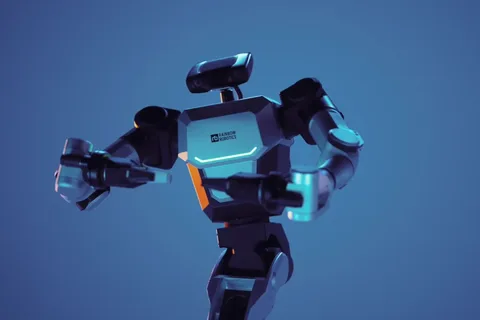
A mobile robot developed by Samsung-controlled Rainbow Robotics has reportedly begun testing inside a Coupang fulfillment center, marking what could be its first deployment in a live commercial warehouse environment. According to a report by The Korea Herald, Coupang is evaluating Rainbow Robotics’ RB-Y1 robot to determine whether it can reliably sort, transport, and handle goods within one of South Korea’s highly automated logistics networks. While neither Coupang, Samsung, nor Rainbow Robotics has publicly confirmed the pilot, industry sources told ETNews that a larger deployment could follow if the tests prove successful. The reported trial represents an important step for the RB-Y1, which until now has primarily been used by universities, research institutions, and industrial partners for testing and development. A different kind of humanoid Unlike the bipedal humanoid robots grabbing headlines worldwide, the RB-Y1 takes a more practical approach. The machine combines a wheeled autonomous mobile base with a dual-arm upper body designed to mimic the movement of a human torso. The robot stands approximately 1.4 meters tall and weighs 131 kilograms. Its two robotic arms offer seven degrees of freedom each and can handle payloads of up to 3 kilograms per arm. Mounted on a high-speed wheeled platform capable of traveling at 1.5 meters per second, the robot is designed to navigate warehouses, factories, and research facilities while performing tasks such as picking, sorting, and manipulating objects. Rainbow Robotics says the platform uses a 20-axis whole-body control system to maintain stability during movement and when handling items. The company also developed collision-avoidance software that prevents the robot’s arms from interfering with each other during operation. Why Coupang is interested For Coupang, South Korea’s largest e-commerce company, warehouse automation has become increasingly important as the company seeks to improve efficiency and reduce operating costs. The company has invested heavily in robotics, automation, and artificial intelligence in recent years. According to The Korea Herald, Coupang has invested more than $84 million in global AI startups since 2023 as part of broader efforts to modernize its logistics infrastructure. The potential benefits extend beyond productivity. South Korea’s Serious Accidents Punishment Act holds executives legally accountable for fatal workplace accidents, creating additional incentives for companies to automate potentially hazardous tasks. With a payload capacity better suited to lighter goods than heavy lifting, the RB-Y1 would likely be deployed for sorting, picking, and moving smaller items if the pilot progresses to commercial use. Samsung’s growing robotics ambitions The trial also highlights Samsung’s expanding ambitions in robotics. Samsung increased its stake in Rainbow Robotics to 35 percent before making the company a subsidiary, identifying robotics as one of its next major growth areas alongside artificial intelligence and advanced semiconductors. The move comes as South Korea continues to lead the world in industrial automation. According to the International Federation of Robotics, the country has the highest robot density globally, with roughly 1,012 industrial robots for every 10,000 manufacturing workers. More than seven times the global average. If the Coupang pilot proves successful, it could provide one of the clearest signs yet that advanced mobile manipulators are beginning to transition from research laboratories into large-scale commercial logistics operations.
Source: Interesting Engineering