



By Henry Kelly
Jun 02, 2026
Interview: CEO & Founder on 3D Art, Past Projects, and the Post-Apocalyptic Game Airlock
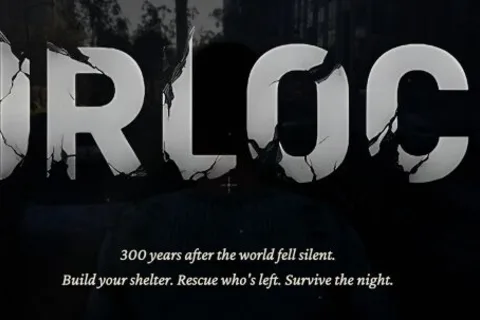
Introduction Hey! My name is Henry Kelly, I'm 35, originally from Liverpool, now living in Kent. I have a wife and six children of varying ages. My youngest, Amarah, is 8 and full of life and energy. She definitely takes a lot of my time. I spend most of my hours with the family: BBQs, DIY, dog walks, and family events. The past few years, I've had to go through a few redundancies at different studios, which took a real toll on my mental health. To keep myself out of the dark, I got more into DIY. I built a huge waterfall and flowerbed in my back garden. My wife had been telling me for two years that I'd never finish it because of my ADHD. I did. We've spent most evenings outside, eating dinner or just sitting and listening to the waterfall. Into 3D Art When I was around 6, my dad used to make side-scroller games on the PC. He's a hardware/software engineer, very clued up. As I grew up, I always loved games. My first James Bond on the N64, football on the SNES (no idea why, I don't follow football), then Tomb Raider, Echo, and Prince of Persia. Gaming has always been a huge part of my life. Around 13, I started building 3D speaker systems and cookers on There.com, then on Second Life. After a while, I realised you could sell Second Life cash back to Linden Lab for real money. I used that as my income source from 15 to 18. I joined the army for a few years, but it wasn't for me. After that came pizza delivery, sales assistant, and forklift driver. Nothing felt like I was doing what I wanted. One day, I asked my wife: give me a chance to put a portfolio together and try to break into the games industry. I worked for a small indie studio (GymCraft), finished my first game, then had my first experience of redundancy. Around that same time, I went up to Liverpool for my uncle John Higgins's, the comic book artist and colourist, exhibition opening. Sitting in the pub with him after the event, he said something I haven't forgotten: that we were more similar than I'd realised in how the art industry had shaped us both. A few weeks later, I applied to Rebellion. First AAA interview, suited up, young and naïve, having just used my cutthroat razor for the first time, so I looked like I'd been attacked by a cat. I got the job. I'll always wonder if my uncle's name helped, but I tell myself it was off my own back. That's where I learned environment art, and where I set the goal of one day opening my own studio. Environment Art A multitude of things. I wanted to create my own game, so I started by creating environments, imagining what they'd look like finished. A lot of it was iteration. I'd finish a scene and think, "My foliage looks bad, but the environment looks okay", so I'd rework the foliage. Then "the foliage looks great, but the world looks bad", so I'd rework the assets, textures, and meshes. A constant iterative loop. That's what improved me fastest. I became deeply familiar with foliage. What grew where, how it grew, and what species it was. I became known as the "tree guy" at work. One colleague kept leaving potted plants on my desk as a running gag. I'd randomly walk into the studio with a box full of leaves, branches, and bark I'd scanned at home (photoscanning was all the rage at the time). That's part of why Allegorithmic featured me at GDC 2017/2018 and ran an interview that's now on the Adobe website following their takeover. Projects These are some of the projects I contributed to, small to large: GymCraft/FreeDriver VR: My first job. A VR fitness game cycling through environments, rolled out in gyms in Tokyo and Japan. Rebellion: Worked on the DLC end of Sniper Elite 4 (small props, music boxes, set dressing), Zombie Army 4, Strange Brigade cutscene work (a giant door, a bridge/walkway, and a parachute), then the core team on Sniper Elite 5. Until my mother-in-law became very ill with cancer, and we moved back down south. Offworld Industries: Working on Squad. A teaching gap: Two years teaching Game Development at university, while I worked through my mental health and a second redundancy. REWIND (now Magnopus): during Covid. Weavr, a fashion demo, a Formula 1 animation introduction for the Grand Prix, and other non-game projects. nDreams: as Principal Artist on Synapse, a beautifully strange PSVR2 game. Ubisoft Leamington: for two and a half years as Lead Artist across weapons, vehicles, vegetation, materials, lighting, environment art, content art, plus co-dev lead with partner studios on an Unannounced IP. The whole Leamington studio was closed by Ubisoft in 2024. That hit hard. I went into a major depression, which is when I started building the garden waterfall to channel it. Gunzilla Games: on Off the Grid. I joined as Lead Biome Artist and was promoted by Vlad to Art Manager during my time in Germany. The studio later restructured after the game's pivot. Redcatpig: freelancing on Road Kings for Saber Interactive, plus one of Redcatpig's internal IPs. My first job at GymCraft pulled me in for good. Over time, I really loved the workflow, the people, and how teams interacted. It felt like where I finally belonged. My brain thinks and acts differently, and the industry was the first place I could be creative without being judged for it. Outside work, I've always been a heavy gamer. CS2, CSGO, VALORANT, The Last of Us. Games that make me want to spend hours inside their environments, rebuilding them or improving them in my head. Airlock Airlock is built around one core idea: plan in the ant farm, live in the 3D city. Two camera modes, one game. You design your underground sanctuary from a side-view dollhouse perspective (think Fallout Shelter with depth and real scale). When you're ready, you drop into your bunker in full third-person and walk the corridors you authored. Switch back at any Airlock Computer terminal in-world. Plan, live, plan again. Narratively, Airlock is set 300 years after the Sonic War, a conflict that fundamentally broke the surface. The Altered (twisted human descendants of the wavefront) hunt by night. The remaining humans live underground in airlocks. You wake as Kore, a survivor with no memory and a single sentence scratched on the wall: Save them all, Kore. You build the airlock. You rescue Survivors from the ruined city of Ashgate (they become Settlers when they join you). You assign them to rooms based on their skills: medics, engineers, farmers, cooks, gunsmiths. Settlers unlock modules. Modules unlock new gameplay. You can't build a Tier 2 Medical wing without rescuing someone who can run it. Every rescue grows the family. Every rescue brings someone you might lose. When your base hits its limits, you move to a new airlock elsewhere in the world. The previous one becomes a trading partner via the underground metro network connecting bases. Different airlocks have different perks: wider, deeper, and in better resource regions. As you progress, you learn more about The Altered. Why do they exist? Why is humanity hiding underground? And whether what you're rescuing was ever really human in the first place. There's a hidden faction called Legion, smart enough to know what they are, centuries old, with motivations they haven't yet shared. If you've ever loved The Last of Us, The Alters, State of Decay 2, This War of Mine, Project Zomboid, or Fallout Shelter, Airlock lives in that exact space. The Last of Us meets The Alters with a rescue loop instead of a tower defence loop. Gameplay Mechanics The dual-view hub-and-spoke loop is the core. Build the bunker in the ant farm view. Walk it in 3D. Go out to the surface to rescue Survivors. Bring them home. Place them in modules that match their skills. Repeat, deeper, longer. Layered on top of that: Power networks. Generators trip on overload, lights flicker, and you need fuel to keep them running. The generator state affects every module that depends on it. Water, food, hunger, thirst, stress. Full survival simulation feeds into the Settlers' morale and effectiveness. Day/night with a toxic surface at night. Night-time exposure damages you without mask gear. The Altered get worse after dark. Construction state with mining windows. Upgrading a module takes in-game hours and exposes ore nodes you can mine during the build. Skip the mining, lose the loot. Permadeath at greater difficulties. Settlers you rescue die for real. Story consequences and all. At the highest tier, even Kore dies for good. Skill system: 17 parent categories, 100+ sub-skills. Cooking, engineering, gunsmithing, medical, fishing, brewing, alchemy, weapon craft, the lot. Settlers' level via use, books, teachers, and research points. Broadcast Rescue System. Survivors broadcast distress signals from Ashgate. Your Lookout Post module receives them. You track the signal, race Legion patrols, save who you can before the broadcast fades. The Altered hierarchy. Not all enemies are the same. Feral ones swarm at noise. Stalkers track from a distance, calculating when to strike. Husks are fast and fragile, Shambles slow and tough, Ragers red-eyed frenzy. Legion stands above them all. Inspirations and Development Process The inspirations for Airlock are layered. The mechanical core came from The Alters. I loved the dollhouse base management but didn't love being locked into 2.5D. You could zoom, but never properly walk it. My idea was simple: keep the side-view planning, but let the player walk into the world they just built. Walls slide away in build mode, then close back up when you go out to explore the surface. Story-wise, the tonal target is The Last of Us, particularly the Sarah moments. Emotional, intimate, grounded. Every design decision in Airlock gets checked against that. Settlers are not resources. They are people with backstories. When they die, it costs you, narratively and mechanically. The world is heavy with quiet tragedy: a faded UGA coin in the dust, a dead loyalist scratching your name into a wall, a wrecked car with its engine still running because the driver only just gave up. Visually, I wanted to prove that a small developer with the right pipeline can hit AAA bars. Just because you don't have a hundred people doesn't mean you can't make something beautiful. Airlock aims for visual quality on par with The Last of Us. Reclaimed nature, ruined Ashgate streets, light shafts through dust, the kind of melancholic grandeur that makes you stop and look. The UI is painted-monochrome, hand-feeling, more like a journal in your character's pocket than a sci-fi terminal. Cormorant Garamond serif type, brushstroke buttons, ink-wash backings. It feels human, not technical. The music is by me. I wrote the main theme, "Calm Before The Storm," early in the project. It's the emotional spine of every trailer cut and key marketing moment going forward. Characters are still being brought to the bar by the rest of the world's art. I lead the environment, and I'm working with character pipeline specialists to close that gap as the project scales. Custom Tools for the Game I made several. I started with the basic modular building system as a Blueprint, then migrated to Level Instances because they let me edit interiors live on the grid as I place them. Grid System. Hardest piece because I was learning to code at the same time. Programming has been the wall that stopped me from getting Airlock off the ground in the past. I use AI pair-programming (Codex from OpenAI plus Claude from Anthropic) to bridge the gap. The result: a full Grid System handling module placement, dual-view camera transitions (camera expands as the grid expands), undo/redo on placement, and save/load. PCG Biome Spawner. The tool I'm most proud of. Hierarchical seed-based system: drop elder trees first, they scatter seeds in a radius that spawn matures, which scatter seeds for juveniles, then saplings, then seedlings. A whole foliage ecology from one root tier. All driven by a Data Asset, so I can change biome/region/climate by swapping the asset. I'm strongly considering releasing this on FAB for other indie devs. It would have saved me weeks if I'd had it earlier. City Block Breaker. A custom editor tool that takes IPCG-generated city blocks (made of instanced static meshes) and explodes them into individual editable actors per building, so I can hand-art-direct hero streets without losing the procedural foundation underneath. Foliage Cascade as a PCG node. A custom UPCGSettings and IPCGElement subclass that drives the hierarchical foliage above, integrated natively into Unreal Engine's PCG graph rather than a bolt-on system. One node, three configurations, all driven by the same struct. Main Challenges and Optimization Stepping into a completely new discipline. I'm a 14-year Environment Artist, not a Programmer. I've had Airlock or something like it in the back of my mind for 15 years. I never got this far before because I couldn't programme, and I didn't have the confidence to learn. AI pair-programming changed that. I'm not pretending I wrote the code line by line. I directed the code. I knew what I wanted the systems to do because I've shipped enough games to know how they should feel under the hood. The AI tools translated intent into syntax. Two tools, one designer. End-to-end product. This is genuinely the moment in the industry where an artist with a clear vision can ship something that would have taken a team of five a decade ago. AI development tooling has made solo-led production possible for people who would have been gated out five years ago. Optimization is built in as I go. Nanite is across foliage and environment meshes, with a hybrid system that uses Nanite for hero assets and traditional billboards with fallback shadow catchers for far-distance scatter. For The Altered, I borrowed Days Gone's horde approach. A horde spawner follows a few "intelligent" Altered who calculate properly, and the rest attack the player based on line of sight at minimal cost. Hundreds of The Altered on screen, single-digit CPU hit. Marketing or Community-Building Efforts Honest answer: a lot has happened in the last few weeks, but it's all very recent. What's live right now: theairlock.co.uk is live with a dev diary, roadmap, gameplay GIFs, screenshots, and media gallery. Airlock Steam Coming Soon page is LIVE this week. Wishlist collection active This interview opened thanks to Angelika at 80 Level reaching out after Kirill's networking channel surfaced the project Xsolla intro in flight via Angelika, for future publishing and distribution conversations "Calm Before The Storm" theme song written, scored, and ready as the trailer spine track Newsletter and Discord are up but quiet, deliberately. I held off on community outreach until the Steam page was approved and the demo was closer to playable. Honest advice for other indies: the story sells more than the screenshots. Be honest about who you are, what you've built, and what you've still got to figure out. People back people.
Source: 80 Level