



By Jeremy Kahn
May 21, 2026
Microsoft lost its way in the AI race. Can Copilot get it back on course?
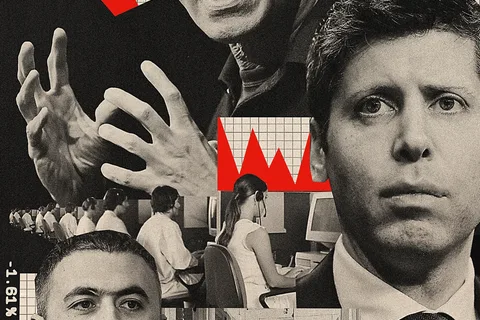
Redmond, Washington, mid-January 2026. The weather, cold and gray. It’s the kind of morning the snooze button was built for. But the team of engineers camped out in Building 92 on Microsoft’s sprawling campus got here early. They are in a race. And they are behind. The team is working on a new AI product, one that functions as a personal assistant, capable of doing everything from booking flights to responding to emails to finding a good local plumber. They know competing teams at other companies are working on similar products. As if they needed a reminder that a lot is riding on their work, Satya Nadella drops by. He wants to show them something. The Microsoft CEO opens a laptop and fires up an application. It’s a kind of system for instructing and controlling multiple AI agents. He calls it “Chain of Debate.” As Nadella walks them through the demo, the engineers trade knowing looks, the sort regulars at the local basketball court exchange when they realize a newbie’s got game. Because Nadella didn’t get someone to build this app for him. He created it himself, vibe coding with an AI tool. “That set the tone for how hard the team was going to push,” recalls Jacob Andreou, the executive vice president responsible for the design of Copilot, Microsoft’s AI assistant. He was in the room with folks, like over their shoulder, there with his machine out. Watching the boss get such excitement out of building new things inspired the team. It wrapped up its big push in late February when it rolled out Copilot Tasks, the computer-using personal assistant AI tool. (Nadella’s own prototype served as the model for a feature called the model council as well as other components of Copilot.) But the fact that Nadella is spending so much time with the teams building AI products, even rolling up his sleeves and building prototypes himself, says a lot about Microsoft’s current predicament. After all, this is a $3 trillion company, not some scrappy startup where the CEO routinely logs on for coding sprints with the developers. Nadella is concerned enough about the company’s AI strategy that last October he announced he was stepping back from some commercial duties to focus on AI research, product innovation, and the build-out of AI data centers. There’s certainly reason for concern. Microsoft’s stock has endured a tough run. After hitting an all-time high in October, over the next five months Microsoft’s share price fell some 34%, despite its cloud-computing platform Azure’s AI-related revenues having more than doubled in the past year. Microsoft has been a prominent victim of the SaaSpocalypse, the selloff of software stocks precipitated by the advent of AI coding agents. Many investors are convinced these products mean businesses won’t buy AI offerings from software-as-a-service (SaaS) vendors such as Microsoft — that, perhaps, they won’t buy off-the-shelf software at all. -34% Microsoft share price decline from 10/28/25 through 3/27/26 Sales of Microsoft’s enterprise Copilot products have been slower than the company would like. Less than 4.5% of the 450 million customers of its Microsoft 365 office suite currently pay for Copilot features. Usage of its consumer-facing Copilot chatbot, meanwhile, lags far behind ChatGPT, Gemini, and Claude. GitHub Copilot, once the leading AI coding assistant, has been supplanted—first by AI startup Cursor, then by Claude Code. Two years ago, Microsoft appeared to be one of the early winners of the AI era. Thanks to Nadella’s prescient bet on OpenAI, Microsoft had exclusive access to the high-flying AI startup’s models, and could use them to create AI features across its products. If companies wanted to access OpenAI’s technology, the only cloud provider they could use was Microsoft Azure. The company even thought OpenAI gave it the best chance in years to compete with Google Search. Nadella, a decade into his tenure, had steered Microsoft through one platform shift — desktop to cloud — and looked poised to repeat the feat. But AI is fast-moving, and two years is a lifetime. This is the story of how Microsoft fumbled its early AI lead, and how it is trying to get it back. What went wrong Microsoft was tripped up in part by the very deal that put it at the front of the AI pack to begin with: its partnership with OpenAI. Microsoft spotted the young San Francisco company early, investing its first $1 billion in 2019, and eventually committing $13 billion to the startup. Microsoft used OpenAI’s tech to launch its Copilot-branded AI products across both its consumer and enterprise software portfolio. But OpenAI’s explosive growth and soaring ambitions after the launch of ChatGPT in late 2022 soon strained the partnership. The two partners clashed over computing capacity (OpenAI constantly wanted more); over intellectual property (Microsoft thought OpenAI was slow to honor its contractual obligation to share innovations); over customers (OpenAI pitched AI models directly to the same enterprises Microsoft was selling Copilot to); and, when OpenAI sought to restructure, over how much equity Microsoft should receive in the new for-profit corporation. Nadella knew that staking his company’s AI strategy on an unproven startup was risky. Those risks were underlined in bold in November 2023 when the nonprofit board that controlled OpenAI’s for-profit arm fired CEO Sam Altman for not being consistently candid—informing Nadella minutes before announcing its decision. Nadella scrambled to reassure investors that Microsoft retained access to OpenAI’s technology, while working with Altman to pressure the board to reverse its decision. Nadella announced a plan to hire Altman and any OpenAI staff who wanted to come with him. The prospect of mass defections forced the board to cave and reinstate Altman. At OpenAI, the five-day crisis became known as the blip. But it left Nadella shaken, according to those familiar with his thinking. He needed to hedge his bets. When Nadella joined a sprint by the company’s AI engineers, “that set the tone for how hard the team was going to push.” Jacob Andreou, EVP, Copilot, Microsoft Plan B came in the form of Mustafa Suleyman, a Google DeepMind cofounder who had left to create his own AI startup, Inflection. In March 2024, Microsoft hired Suleyman and Inflection’s technical staff and licensed their technology in a $650 million deal. Suleyman was installed as CEO of a new Microsoft AI division—MAI for short—responsible both for building in-house frontier models as insurance against OpenAI, and for growing the user base of Microsoft’s Copilot chatbot. It did not go well. Microsoft’s partnership with OpenAI prohibited Microsoft from training models beyond a certain size. “We were very much only able to train native models, Microsoft models, in the SLM, or small language model, size,” Suleyman tells Fortune. The first general purpose language model MAI tested publicly, in August 2025, called MAI-1 preview, ranked well down the performance leaderboards. It was never widely released. MAI also didn’t turn the Copilot chatbot into a consumer hit. A year into Suleyman’s tenure, Copilot usage had flatlined at about 20 million weekly active users, according to press reports, while ChatGPT’s user base rocketed to ever greater heights on its way to 900 million. A major 2025 upgrade, designed to make Copilot more like a personal assistant that could perform tasks, failed to jump-start growth. And the AI-enhanced version of Microsoft’s Bing search engine barely dented Google’s share of the search market. Plan A was also running into trouble. In 2023, OpenAI’s GPT models were head and shoulders above the field. By early 2025, Anthropic’s Claude routinely topped AI leaderboards, and many businesses preferred it for complex tasks. Google’s Gemini was increasingly competitive on visual tasks. But Microsoft’s Copilot offerings were powered exclusively by GPT. What had once been the engine of Microsoft’s AI strategy was starting to feel like a millstone. Judson Althoff, Microsoft’s commercial CEO, acknowledges several missteps. For one thing, calling both its consumer and its enterprise products Copilot was confusing. “The only thing worse than not having a copilot is having more than one,” Althoff, who holds a private pilot’s license, quips. Microsoft also incentivized its sales reps to push both the freemium version of its enterprise M365 Copilot as well as the premium version, when only the premium version delivered the value businesses wanted. “We got that wrong,” he says. Microsoft was also struggling to keep pace with the speed at which AI technology was evolving. A break point came in 2025, when Anthropic released Claude Code, which could autonomously write entire programs from just a description of what the developer wanted. This was no longer a copilot, it was an autopilot. Within six months it had reshaped software development. Then, this January, Anthropic debuted Claude Cowork, an agent that could use software — including Microsoft’s productivity tools, like Excel and PowerPoint—to autonomously complete tasks. Claude Cowork posed a serious challenge to M365 Copilot and the AI agents Microsoft had been pushing customers to adopt. In fact, it posed a threat to most business software. That realization sparked the SaaSpocalypse stock market rout, which would eventually wipe more than $2 trillion off the value of tech shares —including a one-day plunge that erased $357 billion of Microsoft’s market cap in a single trading session. The fixes By the fall of 2025, Nadella realized it was time for a reset. The company’s actions since then have reflected a tricky balancing act, as the company strives to innovate at AI speed like a buzzy startup, while still reliably delivering for investors and enterprise customers like the staid Microsoft of old. He handed many of his commercial and daily operational duties to Althoff, a longtime Microsoft exec, so that he could focus on AI product development. Althoff says he handles horizon zero and horizon one while Nadella looks after horizons two and three. At the same time, Nadella began breaking down silos to make Microsoft faster, flatter, and more agile than ever before, Althoff says. In March, Nadella merged the consumer and enterprise Copilot teams. Suleyman was stripped of his responsibility for consumer AI products and put in charge of a rebranded model development effort: the Superintelligence team. (Suleyman says the name reflects its ambitions and will help it recruit top researchers.) Andreou, who joined Microsoft in 2025 after stints at Snap and venture capital firm Greylock, was put in charge of Copilot Experience across both consumer and enterprise, reporting directly to Nadella. Rounding out the Copilot Leadership Team alongside Suleyman and Andreou are three veteran Microsoft executive vice presidents: Charles Lamanna, who oversees Copilot, AI agents, and platform; Ryan Roslansky, responsible for Microsoft Office and Microsoft-owned LinkedIn; and Perry Clarke, chief technology officer for application systems. “We want it to be one backend, one brain, that powers both consumer and work,” Lamanna says. Nadella himself joins the Copilot Leadership Team’s weekly stand-up meetings and participates in an ongoing Teams channel on Copilot development. Microsoft faces a tricky balancing act: It needs to innovate fast enough to keep up with AI rivals like Anthropic and Google, while remaining a reliable partner for big enterprise customers. Andreou points to two new products, Copilot Tasks for consumers—the product Nadella had played around with prototyping in January—and Copilot Cowork for enterprise customers, as evidence the unified Copilot team is working as Nadella intended. “Both of those things were basically frontier-grade experiences, both for consumers and enterprise users,” he says. “And both are things our teams were able to pull together and build in a matter of weeks.” Microsoft has also agreed to OpenAI’s long-pending restructuring on substantially less restrictive terms. The software giant secured a 27% equity stake — potential upside if OpenAI goes public, as is widely expected. But the old deal’s exclusivity has been abandoned: OpenAI can now cut deals with other cloud providers, and Microsoft can work with other AI companies’ models. Suleyman says the agreement allows Microsoft to finally build larger, more capable frontier AI models that will eventually allow it to be self-sufficient — but adds that it will take two to three years for Microsoft to catch up with the top labs. The revamped partnership allowed Microsoft to embrace OpenAI’s archrival, Anthropic. The company committed to investing up to $5 billion in Anthropic in November and began offering its models on Azure. The ability to use Claude to power Copilot has been popular with enterprises and enabled Microsoft to build Copilot Cowork. To give credit to OpenAI and Anthropic, they’re helping us run faster. Judson Althoff, Commercial CEO, Microsoft But Microsoft is not simply swapping reliance on one loss-making AI startup for dependence on another. The Anthropic investment is indicative of a different bet: that AI models will increasingly commoditize, and that value will accrue—for enterprises, anyway—not in the AI brain, but in all the body parts and connective tissue around it. That’s where Microsoft thinks it can win. It already owns a lot of those organs and sinew: software tools, security, data warehouses, and cloud computing. It has also built IQ-branded products that allow enterprises to create customized workflows, gather their data, and then build, deploy, and monitor agents running those workflows—using any AI model from any vendor. “We don’t think enterprises will swap out their information work platform, their [developer] environment, their security environment, every time a new model drops,” Althoff says. The strategic shift comes with a new business model. Microsoft has traditionally priced its products with per-user licenses— $30 per user per month for Copilot, for example. Customers like it because it makes budgeting easy. But if the AI agents inside those products use models Microsoft doesn’t own, Microsoft has to pay the AI vendor for the tokens consumed. So Microsoft has started moving toward hybrid pricing: a per-user license with a limited token allowance, plus per-token charges beyond it — to keep the model-agnostic strategy from torching its margins. In another cost-conscious move, Microsoft has looked to slim its workforce. In April, it announced its first-ever employee buyout offer, aimed at its most long-tenured employees. The company says about 7% of its U.S. workforce, or about 8,750 employees, qualify for the buyout, at an anticipated cost of $900 million. There’s evidence the revamped enterprise strategy is working. At the end of March, Azure revenues were growing 40% year over year, and Microsoft’s total AI business was on pace for $3
Source: Fortune