



By Michael Kan
Jun 05, 2026
Ten Times More: Elon Musk Aims For 100,000 Starlink Satellites
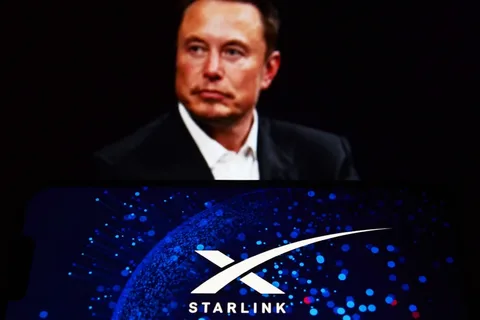
SpaceX’s CEO Elon Musk is eying a drastic increase to Starlink by scaling it up to 100,000 satellites, up from the around 10,000 already in orbit. “We are going to put in orbit, probably a 100,000 satellites, probably over a 100,000 satellites just for communications,” he said. In a tweet on Thursday, Musk also wrote about a ten fold increase for the Starlink constellation involving the next-gen V3 satellites. Musk brought up the goal in a talk with JP Morgan’s CEO Jamie Dimon as part of SpaceX’s roadshow to pitch the company’s upcoming IPO to investors. On why he’s trying to list SpaceX on the stock market now, Musk said his company is embarking on a "significant growth phase" that’ll require more capital. This includes launching orbiting data centers, which could span up to 1 million satellites, dwarfing the over 15,000 active sats currently in orbit. In addition, Musk also mentioned upgrades to Starlink using the upcoming V3 satellites, slated to start flying up later this year on the company’s heavy-lift Starship rocket. “And these will be the version 3 (satellites) and beyond, versus version 2 and version 1 that are currently in orbit,” Musk said. “Version 3 is, depending on how you count it, 10 to 20 times more capable than the version 2 satellite.” It’s already known the V3 satellites have been designed to offer gigabit internet speeds. But Musk also mentioned how the next-gen design contains three chips that are “far beyond state of the art.” The resulting constellation promises to offer “100 times” more in bandwidth than before while halving the latency due to the lower satellite orbits, he added. “I think it will actually be the highest bandwidth, lowest latency means of communicating,” Musk later said of the next-generation V3 Starlink system. “The future of AI and robots is actually going to require a lot more bandwidth than we currently use.” Whether the 100,000 figure also includes satellites for Starlink Mobile, the company's satellite-to-phone service, was left unclear. But last year, SpaceX filed an FCC application to launch and operate 15,000 satellites focused on phone connectivity. The current count for the direct-to-cell Starlink satellites numbers at about 650. (SpaceX) The 100k satellite goal is a bit surprising since SpaceX’s President Gwynne Shotwell told Time Magazine in March, “I don't think we'll have more than 15 or 20,000 Starlink satellites,” indicating the satellite internet constellation might plateau at some point. “But, you know, keep in mind, we have a lot of different technologies,” she added. Starlink is also a major revenue driver for SpaceX, which will face pressure to post strong financials once it becomes a publicly traded company. The Starlink-related business made 60% of SpaceX's total $18.7 billion revenue in 2025, according to a regulatory filing. Expanding the Starlink constellation ten times could exponentially improve its capacity, enabling it to serve more users across the globe. During the talk, JP Morgan’s CEO even mentioned the prospect of Starlink possibly replacing the need for undersea internet cables. (SpaceX) SpaceX roadshow presentation projects Starlink could face a $1.6 trillion total addressable market “split across Starlink Broadband ($870B) and Starlink Mobile ($740B)." On Thursday, the company also reported that the number of “active” Starlink customers had crossed 12 million, although total paid subscriptions were pegged at 10.3 million back in Q1. Still, SpaceX’s plans to expand Starlink have also faced complaints and protests from environmental groups, astronomers and concerned citizens about the satellites creating light pollution, and possibly harming the ozone layer. In January, the FCC largely approved SpaceX’s plan to upgrade Starlink with gigabit speeds. But to launch and operate 100,000 satellites, the company will need to secure further approval from the US regulator, which has currently capped Starlink at 19,400 satellites. In the meantime, the FCC is currently reviewing SpaceX’s application to operate up to 1 million orbiting data center satellites, which has also faced plenty of opposition.
Source: PCMag Australia