



By @njfamilymag, Dina El Nabli
May 21, 2026
The Top 5 NJ Colleges Where Grads Earn the Most 10 Years Later, According to New Ranking
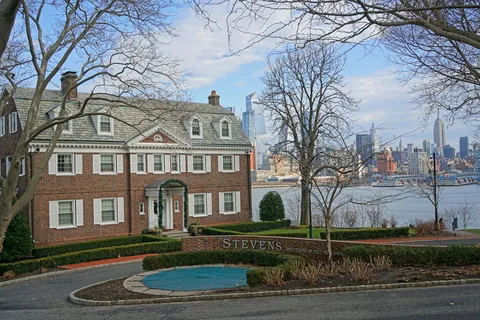
With AI reshaping the entry-level job market for new college graduates, families are taking a much closer look at a college’s ROI before committing to a school. In New Jersey, one outcome-focused ranking puts Stevens Institute of Technology in Hoboken at the top for median graduate salary 10 years after graduation. But salary is only one piece of the college ROI picture. Open School Ranking, a college ranking site that uses data from the U.S. Department of Education’s College Scorecard, found that Stevens grads earn a median salary of $119,000 10 years after graduation. That puts Stevens first in New Jersey when it comes to earnings a decade after graduating and No. 7 nationally for earning power, according to Open School Ranking. The top New Jersey colleges for graduate earnings 10 years after graduation are: Stevens Institute of Technology — $119,000 Princeton University — $110,000 New Jersey Institute of Technology — $105,000 Rutgers University–New Brunswick — $87,000 Rutgers University–Newark — $84,000 Dan Ye, a Johns Hopkins lecturer, technologist and founder of Open School Ranking, says there is a crucial and obvious caveat to this list. Overall, Princeton graduates have built far more billion-dollar companies and venture-backed startups than graduates from most schools, including Stevens Institute of Technology, he said. But when looking at average salaries 10 years after graduation, Stevens STEM grads come out on top in New Jersey. Princeton University / istockphoto.com/Brian Logan Stevens is only higher than Princeton when it comes to earnings 10 years after graduation, as shown in the list above. But Princeton is higher overall in the rankings because graduates of the Ivy League school have created more unicorn start ups and obtained more venture funding compared to Stevens (as listed in the columns of Unicorn Founders and VC Funder Founders). The overall ranking is made up of 60 percent graduate earnings; 20 percent PhD matriculation; 10 percent Unicorn success rate; and 10 percent Venture Capital success rate. This overall combo places Princeton at the top. Because Princeton is out of reach for all but a tiny percentage of applicants, we asked Ye what families should consider when looking beyond the Ivy League and weighing salary data, cost of attendance, prestige and long-term college ROI. New Jersey Family: Which New Jersey colleges lead to the highest salaries 10 years after graduation and how much should families weigh that against cost, campus fit and student happiness? Dan Ye: The answer may surprise you. You are probably thinking of Princeton University, right? But the school with the highest graduate salary after ten years is actually Stevens Institute of Technology. At $119,000, Stevens graduates rank #7 in the nation in earning power. Now, attending Stevens is still far more expensive than attending Princeton because of the generous financial aid Princeton provides. However, Stevens is a hidden gem that results in disproportionate earning power compared to its national reputation. Campus fit and student happiness are obviously very important. But in an age of automation, families should really put a lot of weight on graduate earnings as a barometer for choosing which college to attend. After all, sending one’s kid to college is one of the biggest financial decisions a family can make. NJF: Does a university’s prestige and rankings lead to better ROI and higher long-term earnings? DY: I think it depends on how much financial aid you receive. Princeton’s sticker price is approximately $65,000 in tuition, but the average annual cost is only $6,128 once you factor in financial aid. In contrast, Stevens Institute of Technology’s cost of attendance, after aid, is still $41,346. So if you get into Princeton, by all means, go. But the median salary after ten years doesn’t tell the whole story. In the last 26 years, Princeton University had 52 students who built companies that reached over $1 billion in market cap—the so-called unicorn companies. Stevens only had four. Princeton had over 600 students who built companies that received major venture capital backing, compared to less than 100 at Stevens. If you are doing an economic return on investment analysis, you have to take these “other” factors into consideration to get a more complete picture. Rutgers University in New Brunswick / istockphoto.com / Hal Goodtree NJF: How much does a student’s major and career path matter compared with the prestige of a college or university when it comes to future salary? DY: What you major in counts much more than where you go to school—until you get to the very top. If you look at where unicorn companies come from, there are really only a dozen or so schools that produced almost all of them. If you want to get a stable, well-paying job, go to Stevens Institute of Technology. But if your ambition is to build a billion-dollar company, you are better off at one of the “unicorn factories” like Princeton, Stanford and MIT. You can see more data on graduate salaries and unicorn counts here: https://www.openschoolranking.com/salary/ NJF: If you could give parents one pro tip when searching for the best college ROI, what would it be? DY: Don’t just look at the university’s ranking. Look at whether the graduates are actually getting jobs. Generally speaking: go to a university in a major city, study a STEM subject, choose a school with a strong entrepreneurship culture, and embrace A.I., because the employers of the future will demand A.I. proficiency.
Source: njfamily.com