



By @IntEngineering, Atharva Gosavi
Jun 15, 2026
Unitree's G1 humanoid robot eyes challenging Mount Everest summit
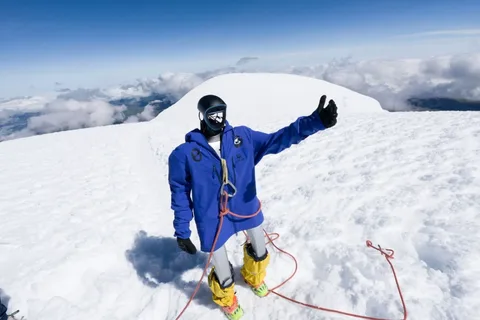
A Unitree G1 humanoid robot is being prepared for a planned Mount Everest expedition later this year after taking part in a high-altitude test on Mount Chimborazo in Ecuador. The robot, named Pemba, was provided by Eastworlds Labs, the AI robotics initiative of Virtuals Protocol. It was part of a Geologic Dome expedition that placed the robot at 20,312 feet on June 5, 2026. The Chimborazo mission is being treated as an early test before the planned Everest trek in the fall. Mount Chimborazo is known for a unique geographical fact. Its summit is the farthest point from Earth’s center and the closest point to the Sun on Earth. Eastworlds Labs said the expedition supports its larger goal of bringing autonomous AI agents into the physical world. The team also documented the mission and plans to create a trailer for the Everest expedition. The project is working with the production crew behind Netflix’s 14 Peaks: Nothing Is Impossible. Everest is the next challenge The planned Mount Everest trek will take the project into one of the world’s most difficult mountain environments. For Eastworlds Labs and Geologic Dome, the aim is not only to place a robot in extreme terrain. The larger goal is to test whether humanoid robots can support conservation, research, and monitoring in places that are hard or dangerous for people to reach often. According to Eastworlds Labs, the Unitree G1 robot will be donated to the local Sherpa community for the Everest expedition. The company said this will connect the project’s legacy to the region where the next mission will take place. The Everest plan follows the Chimborazo expedition, where Pemba was the only humanoid robot used. The Unitree G1 weighs 77 pounds (35 kg) and can fold down to 690 mm, which made it easier to transport through difficult terrain. During the Ecuador mission, the team disassembled the robot and carried it between camps. It was then reassembled at different stages of the journey. Chimborazo test pushed the robot Mount Chimborazo gave the team a difficult test before Everest. Temperatures on the mountain can fall to 5 degree Fahrenheit (-15°C), while wind gusts can reach 55 miles per hour (90 km/h). To help the robot handle these conditions, the Unitree G1 was fitted with custom cold-weather jackets, gated enclosures, and composite feet. The robot’s autonomy system was trained in NVIDIA Isaac Sim at 1,620 times real-time speed. Eastworlds Labs said the system achieved 85 percent sim-to-real transfer on uneven terrain. The robot was also pretrained to respond to wind turbulence and recover its balance on technical alpine terrain. Communication during the expedition was supported by a proprietary mesh relay across camps. Satellite internet at each camp delivered 25 ms latency. This stayed below the 50 ms limit needed for live teleoperation with Reflex’s latency software. Conservation goal behind the mission The Everest plan is part of Geologic Dome’s broader conservation work. The organization is building autonomous infrastructure for conservation zones. This includes communication relays, AI-powered ecological monitoring, and energy-independent robotic platforms. Eastworlds Labs said it sponsored the Chimborazo expedition and is also contributing funding toward Geologic Dome’s nature conservation work. Geologic Dome is currently testing its approach across three sites. These include equatorial forest in the Democratic Republic of Congo, montane cloud forests in Ecuador, and the full Himalayan altitude gradient in Nepal.
Source: Interesting Engineering