



By @wired
Jun 11, 2026
Why You Might Already Own SpaceX Shares, Siri’s AI Makeover, and Knicks Owner’s Surveillance Machine
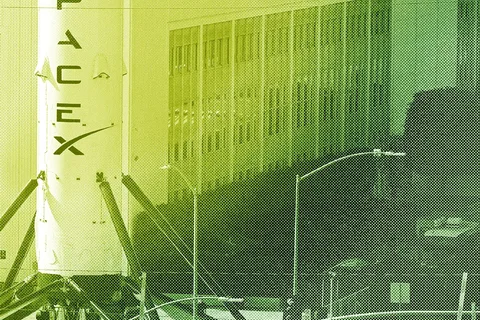
This week on Uncanny Valley, our hosts discuss SpaceX officially going public and who will benefit the most from it, as well as Apple’s WWDC and the brand new release of Siri AI. They also get into how Meta removed a facial recognition feature after a WIRED report exposed it—and later in the show: an investigation into how New York Knicks’ owner James Dolan created an extensive surveillance system inside all of his Madison Square Garden properties. Articles mentioned in this episode: Everything Apple Announced at WWDC 2026 Meta Deletes Face-Recognition System From Its Smart Glasses App After WIRED Report The Shocking Secrets of Madison Square Garden’s Surveillance Machine You can follow Brian Barrett on Bluesky at @brbarrett and Zoë Schiffer on Bluesky at @zoeschiffer. Write to us at [email protected]. How to Listen You can always listen to this week's podcast through the audio player on this page, but if you want to subscribe for free to get every episode, here's how: If you're on an iPhone or iPad, open the app called Podcasts, or just tap this link. You can also download an app like Overcast or Pocket Casts and search for “uncanny valley.” We’re on Spotify too. Transcript Note: This is an automated transcript, which may contain errors. Brian Barrett: Hey, this is Brian. Before we start, two quick things. If you've been enjoying listening to the show, would appreciate it if you took a second to rate it in your app of choice. It really helps us reach more people. Second, if you have any questions related to tech, privacy, or politics that you would like me, Zoë, and Leah to take on, now is the time to submit them to [email protected]. It doesn't matter how big or how small we want to hear from you and get you answers. OK, onto the show. I'm a little tired, but it's because I got to see Lionel Messi play soccer last night and score a goal on a penalty kick. Zoë Schiffer: That's really fun. Brian Barrett: Yeah. It was a friendly of Argentina versus Iceland. You'll never guess who won. Zoë Schiffer: I literally won't. No. No. Brian Barrett: It was Argentina. Zoë. Zoë Schiffer: Got it. OK. Is that an obvious thing? Brian Barrett: They're very good at soccer. Zoë Schiffer: Cool. That's so nice for them. Happy for them. Welcome to WIRED’s Uncanny Valley. I'm Zoë Schiffer, director of business and industry. Brian Barrett: And I'm Brian Barrett, executive editor. On today's show, we're discussing Apple's key releases from their annual developer conference, especially the company's long awaited AI makeover for Siri. It's far from their first attempt, but it's going to stick this time. Zoë Schiffer: We're also taking an early look at the SpaceX IPO this week, which is slated to become the world's largest IPO of all time. We'll get into who is slated to benefit the most. Elon Musk, who is already the world's richest man, but on track to become even richer and why you might find yourself among the investors without even realizing it. Brian Barrett: And in case you missed it, WIRED reporters recently uncovered that Meta had silently embedded code that would power a face recognition system for its smart classes in the Meta AI app on millions of people's phones. A day after we reported that story, Meta removed the code. We'll talk about how all that unfolded. Zoë Schiffer: And later in the show, for all of the basketball fans who've been glued to the NBA finals, we have a special guest who will tell us about his investigation into Madison Square Garden's surveillance system. Brian Barrett: So Zoë, another week that we get to talk about a developer conference. Zoë Schiffer: I know. Leah's away, and wow, have you taken advantage of that situation? Brian Barrett: Oh yeah. No, yeah. I'm pushing it through. You were so thrilled about Google IO. Zoë Schiffer: I will say slightly more excited because Apple, as you and I have discussed many times, bit of a laggard in the AI race and I feel like this was their opportunity to tell the world what has changed since the last developer conference. Brian Barrett: For people who aren't familiar with WWDC, this is Apple's annual event where it gathers a bunch of developers from all over the world and they announced upcoming releases and changes to their software for the iPhone, iPad, Apple Watch, Mac. This year, the biggest announcement, which as we said, has been their biggest announcement the last couple of years, was around Siri. They're rebranding it as Siri AI. Siri was always an AI product, but now they're for real serious about it. And it's a ground up rebuild or so they're billing it of Apple's voice assistant. This version of Siri will be powered by the next generation of Apple intelligence, which is Apple's personal AI system. All of this probably sounds familiar and that's because we've heard it before. Apple's senior VP of software engineering Craig Federighi first announced Apple Intelligence back in 2024 at the WWDC keynote. Craig Federighi, archival audio: We are embarking on a new journey to bring you intelligence that understands you. And there are already some really impressive chat tools out there that perform a vast array of tasks using world knowledge, but these tools know very little about you or your needs. Brian Barrett: And they would still not for some time. Again, in 2025, more promises for even more powerful AI or really AI that was powerful at all and hinting at a rebirth for Siri. Craig Federighi, archival audio: We're continuing our work to deliver the features that make Siri even more personal. We're making the generative models that power Apple intelligence more capable and more efficient. Brian Barrett: Zoë, this is so much like when you and I are both reporters and editors to a certain extent, but it's very familiar when you are in a situation where you're going to your editor and saying, "I'm just going to do a little more reporting. I have made so much progress on this story, but I just need another week or two for more calls." Zoë Schiffer: A tiny bit more time. Just a little more time. I will say, distracted by how smooth Craig's voice sounds, he must practice so much for that. Brian Barrett: Well, and this is an audio medium, but his hair is also famously, I think, the best hair in Silicon Valley. Zoë Schiffer: Yes. Brian Barrett: So Craig has a lot going for him, just not Siri capabilities. But the changes brought by both of these announcements were underwhelming to say the least and to say the most, we should point out that about a month ago Apple agreed to pay a settlement of $250 million for a class action lawsuit that basically said that Apple intelligence is not that intelligent. It's not living up to the promises that Apple made. So it's sort of a situation of fool me once shame on me, fool me twice shame on you, fool me three times. Zoë Schiffer: Go to Google and make a deal so you can actually be intelligent. Brian Barrett: Exactly. So yeah, that's what has happened. Now Apple is going to rely largely on Google Gemini to help power Apple intelligence under the hood. Zoë, what do you make of that? Zoë Schiffer: Yeah, I mean, I think it makes a lot of sense. Frontier models are really expensive and difficult to build. Google has already done it pretty successfully. I think if you look at, say, enterprise coding models, Gemini is not the best of the best, but in a lot of other ways it is quite cutting edge. And so yeah, it makes sense these two companies have worked together before to great effect for both of them. I was curious and have been kind of chatting with sources at both companies to see, is this partnership long-term? Has Apple thrown in the towel permanently and just said, "This is fine. We'll rely on it." Or are they furiously working in the background to try and build up their frontier capabilities and eventually make Siri run on Apple technology start to finish? People are, as you might expect, being very tight-lipped about that and they haven't really said what the long-term future of this product is going to be. Brian Barrett: I'll say two things that if you dig a little deeper, not that much deeper, but a little deeper into the documentation from the conference, two things really stand out to me about Apple's approach to AI in this snapshot moment. One is a sort of relentless focus on on- device AI. So where Apple has been putting in time and work in a way that's showing publicly right now is finding ways to make as much of the AI capabilities as possible happen on your device so that it doesn't go back to Apple. No one knows what you're doing or that there is a privacy angle to it. The other thing that was interesting to me—also privacy—is that for the first time, and a reason why Google makes a good partner is that Apple has something called private cloud compute. They rolled it out two years ago. It is a fancy, very technical way to be a privacy preserving AI service. It has made a deal and worked with Google and NVIDIA to make private cloud compute work on Google Cloud. So previously all of these things happened on Apple Cloud. Now you've got the infrastructure to support as well, which I suspect Google was in a better position to provide than some of the other competitors that would've been on their radar. Zoë Schiffer: Yeah. So this was kind of my takeaway for what is their big value proposition in addition to saying this version of Siri is actually going to work and be intelligent. They're also saying in parentheses, unlike all the other companies, we are really focused on privacy. And I think in this moment where there's a lot of open questions around if you are a lawyer and you're speaking to a chatbot, are those conversations private or are they discoverable if there's a court case if you— Brian Barrett: And by the way, they are discoverable. Zoë Schiffer: Yes, they are. That's not an open question. Yeah. But basically how private are your communications with chatbots? And the reason that this is so critical is people aren't just having work conversations. They're using the same technology to help with their homework as they are to have very private mental health conversations or what have you. And so this idea that if you're using an Apple device, you can trust a little more that it's just staying on your device. It's not bouncing around to different places. It can't be intercepted as easily. I think that makes a lot of sense. And I will say Apple has gotten, this is a stand that they have taken again and again. And I think that while it has gotten them in some hot water, for example, when they refused to put a back door in an iPhone that would've allowed the FBI to hack into the phone of someone who had committed a very serious crime, they've kind of stuck to their guns overall and been like, no, privacy is our core differentiator. And I will say having talked to a lot of people at that company, they really seem to live it and believe it there even though there are clearly trade-offs at times. Brian Barrett: Yeah. It's definitely predated AI, the privacy focus. And it also plays to their strengths in other ways too, or rather plays to their weaknesses in some ways. Siri AI is going to be better. Our reporters who have played with it a little bit have indicated, yeah, it can do things now. You can actually have a back and forth conversation with it. It can pull context from your emails and messages and photos and sort of know more about you, again, all within the context of your advice, but it's really table stakes stuff, right? It's, Siri's going from being annoying and bad to probably being basically usable. So you need something else in there. Zoë Schiffer: Exactly. I was kind of curious about this decision to just stick with the Siri branding because I feel like Siri has been around for so long. It has such a bad reputation at this point of just being not that useful. They have tried now multiple times to insert AI into it and been completely mocked and derided for their failures there. I was like, at this point, I might just start fresh, say we have a completely new assistant, it's got a new name, but no, they're sticking with the branding. Brian Barrett: Well, I wonder too how much they need Siri AI to be that to my mind if I'm Apple, which I'm not, but I think about this as the iPhone is going to be the AI device. So we just need an experience that is good enough for people who want the default. If you want to use OpenAI, if you want to use ChatGPT, you've got your iPhone. You're going to do that on your iPhone regardless of what device Jony Ive and Sam Altman are cooking up. They own the main portal through which you're going to experience these things no matter what. Zoë Schiffer: Yeah. For now, for now. For now. OK. So we're going to see these changes roll out in the United States. They're not going to roll out in Europe or in China. Is that right? Brian Barrett: That's right. And that's happened before either from delays or not rolling out at all just because the European regulatory environment is a lot more strict than it is in the US. There are a few laws in there. There's the Digital Markets Act, which requires large tech companies to make their products interoperable, which means they have to be able to work with other companies' products. Apple doesn't love doing that. An EU spokesperson gave their perspective this week to reporters. Archival audio: The decision not to roll out Siri AI in the EU is Apple's and Apple's only because absolutely nothing in the DMA prohibits Apple from introducing new products in the EU. What Apple is however not allowed to do just like any other gatekeeper is to close the market. It is not for them to decide who gets to innovate in Europe and it's not for them to choose which AI tools our EU citizens get to use or not. Zoë Schiffer: I have one thing to say, which is I think Europe needs to write better regulations. I have talked to many people who do legitimately feel like these are prohibitive to innovation and honestly just very confusing. Brian Barrett: Yeah. It says a lot that Apple is just like, "You know what? Fine. We're out. "That's a pretty high bar and— Zoë Schiffer: You can have an inferior product. Moving on to the tech reporting Super Bowl, which is on Friday, SpaceX is officially going public. Brian Barrett: Congratulations to all the newly minted billionaires. Zoë Schiffer: Thank you. Just kidding. We're not among them, but many people are and we will get into that. It is slated to become the largest IPO in history. It set its price at $135 a share, which would value the company at roughly $1.7 trillion. Brian Barrett: That is trillion with a T and an R. Zoë Schiffer: So a lot of companies go public every single year, but SpaceX's debut marks the entrance of AI companies hitting the public markets. Anthropic is slated to go public as is OpenAI. They've both confidentially filed their S1s and then announced those confide
Source: WIRED